Release Note 16.4

In this version 16.4, we have added functionalities to improve the platform’s performance and increase its reactivity for the user in the administration tool, but also for the user in B2B or B2C sites. Finally, in a less visible but just as crucial way, some of these developments have made it possible to reduce by a factor of 5 the time required to update pre-packaged products, from the filing of files by producers to their availability for booking in the sales process.

In addition, numerous developments have begun in order to significantly increase the possibilities of service management by the platform. Part of these developments will be spread over two versions and will be available in 16.5.

Sending of scoring data to Pledg

When using Pledg during a payment, a scoring algorithm can be used, requiring further information to be sent in addition to traditional payment information.

This information includes :

  • Date of birth
  • Email address domain
  • Post code
  • Is the applicant also the traveller?
  • Has their telephone number been entered?

Information about the chosen trip :

  • Number of passengers:
  • Departure and return dates (dates of the last and first flight, in the case of a multi-destination trip)
  • Departure country and final destination country (departure country for the last flight in the case of a multi-destination trip)

Traveller information :

  • Passenger ID number (or passenger number indicator)
  • Birth dates of adults and children.
  • Identification document used, its expiry date and issue country, where this information is available.
Improvement of the air transport process

Display of terminals :

Where such information is available from Misterfly, we now store and display the terminal from which a flight leaves in the transport reservation process, and also in the Back Office and the confirmation email.

Recording of validating carrier

The validating carrier field has now been added, and can now be seen in the Back Office for sales made via AirGateway.

Corsican pricing

Pricing for Corsican residents is now available for reservations via Amadeus.

Optimisation of availability imports

To reduce availability import overhead, we have added a configuration to reduce the import frequency for the availabilities of unpublished products. This frequency can be adjusted in numbers of days, from an interval of 0 (current behaviour, automatic imports of availabilities) to 7 days (one import per week).

Now, before the availability for a product can be imported, it must meet one of the following 7 conditions:

– The configuration key covered by this enhancement is equal to 0
– The product is published
– The product is unpublished and it has a publication in progress
– The product is unpublished and there is no availability for it
– The product is unpublished and it is contained by a pre-package
– The product is unpublished and it is contained by a merged package
– The product is unpublished, it has availabilities and those availabilities were imported more days ago than the number of days defined in the configuration key

Configuration is on a per-distributor basis, and its default value is 7 days.

Back Office improvements

Information from agencies is now available in new parts of Back Office files in order to simplify operations for producers or distributors with centralised file tracking.

We have improved the legibility of invoices and, in particular, titles which could be rendered in similar shades in some browsers. They are now more readable, with better contrast.

Differential imports of availabilities

A technical optimisation has been made to reduce the import times for Pre-Package availabilities in the administration tool. The essential method is to supply your various instances of Orchestra only with product availabilities which have been updated by certain events. For example, an automatic update session, a new cache file import).

Drawing upon a number of rules, only availabilities that are likely to have been updated are recalculated. By reducing the number of calculations to be performed, update times are thus reduced and these updates can be made more frequently.

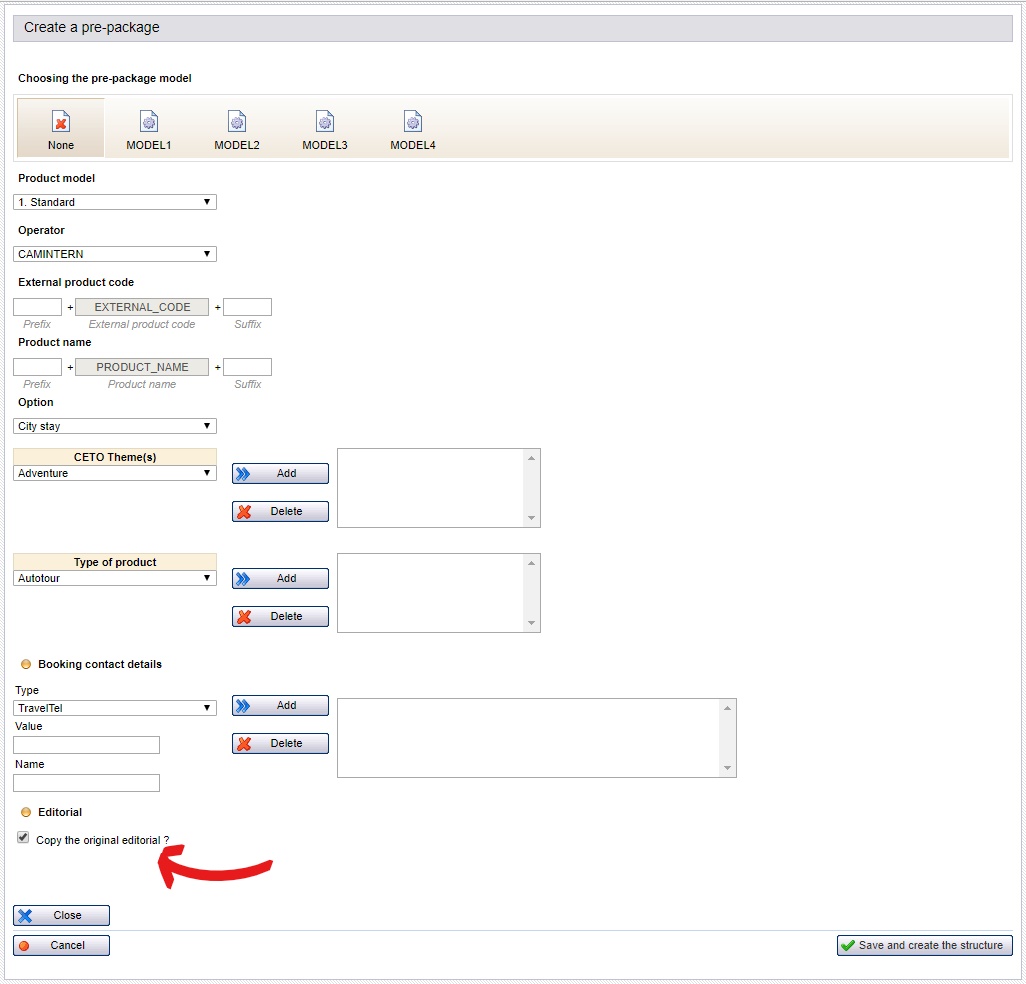
Création d’un Pré-Package
à partir d’un hôtel et contenu éditorial

From now on, when you create a Pre-Package from a hotel, it is possible to copy the hotel’s original editorial content so that you can use this information as the basis for the Pre-Package presentation.

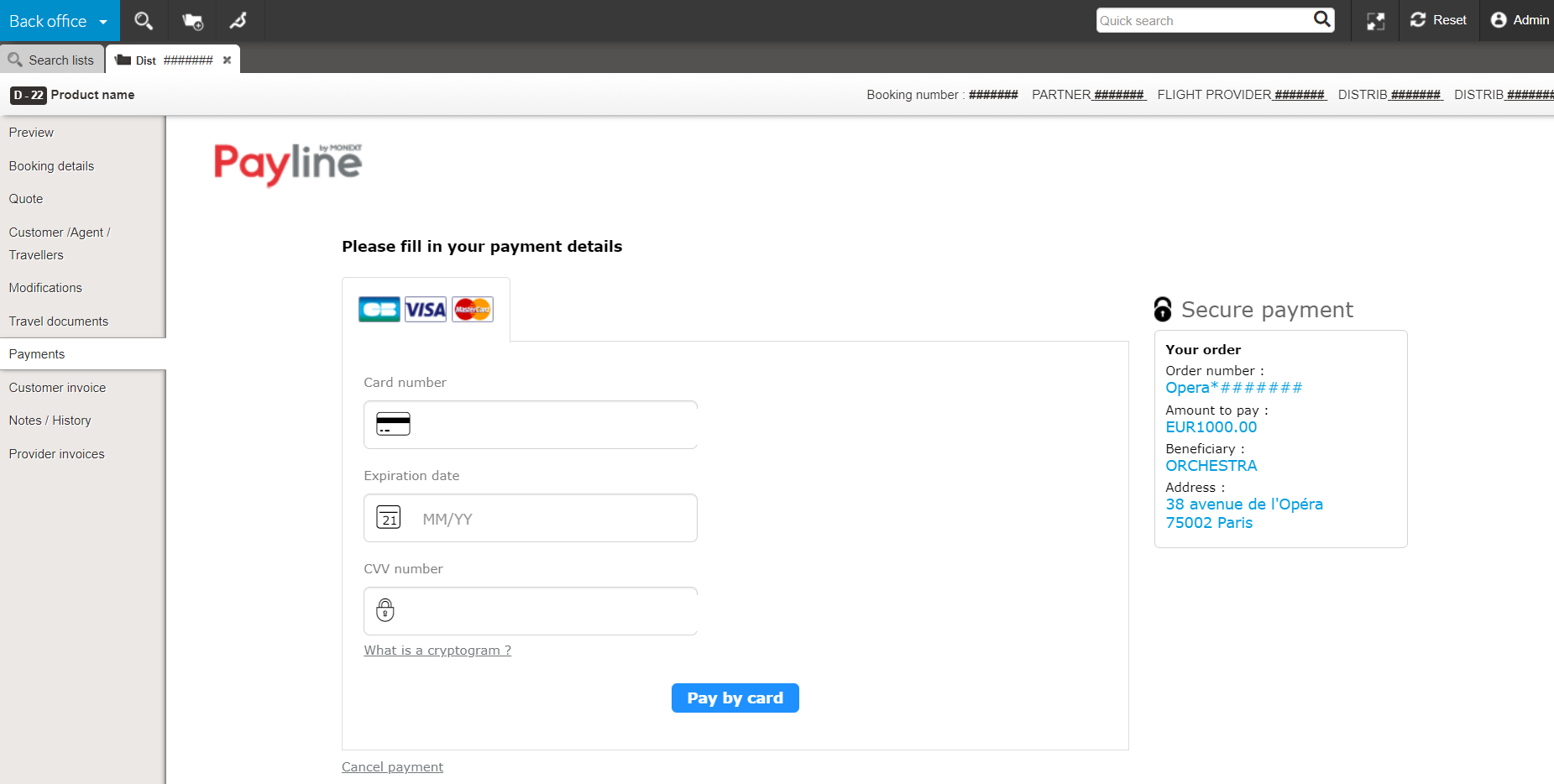
Introduction of Payline and introduction of Oney via Payline and Payzen

The Oney multiple payment system is now available via the Payline and Payzen PSPs in the reservation process.

It is even possible to perform all payment transactions with Payline in the Back Office:

  • Card payment.
  • Payment by alias (tokenization).
  • Payment by email (bank card, PayPal).
  • Automatic payments.
  • Refunds.

Improvements to services

  • Comprehensive redesign of the services template, enabling future versions to dynamically add complex, customisable services (such as sports lessons, involving the entry of a place, a level, an age and possibly a teaching language) into the reservation process or a pre-package.
  • Addition of the concept of location for services, as well as search and filtering functions for these locations, allowing (for example) the selection of an activity service based on its meeting point or a location service based on its finishing point.

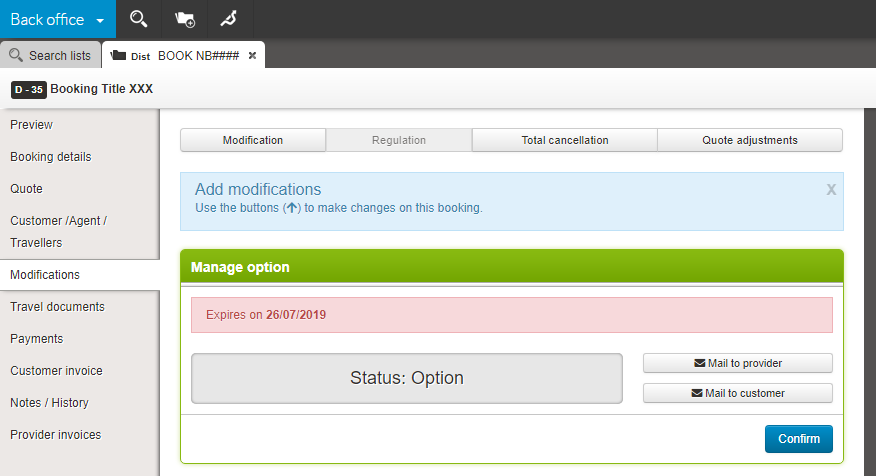
Option confirmation in Gestour

From the Orchestra Back Office, it is now possible to confirm an option via webservices in Gestour V3.

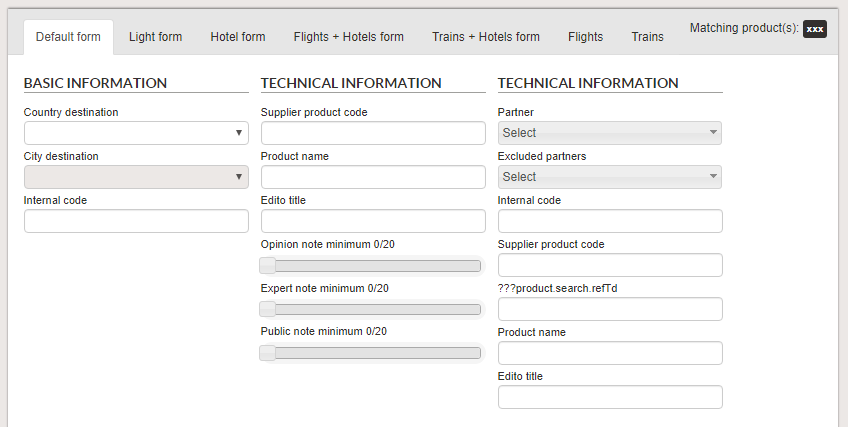
Responsiveness of B2B search engines

In order to improve search engines’ B2B response times, we have implemented a pregeneration system for these engines taking account of users’ differing travel policies. This pregeneration can significantly reduce reaction time when accessing the B2B.

Availabilities webservice in JSON format

In order to improve responsiveness and options for webservices to return availabilities (e.g. when implementing a B2C site), it is now possible to configure returns in an ad-hoc JSON format that meets your specific needs. This implementation has reduced some webservice responses to a third of the time.

Changing the origin of a product

From the administration tool, it is now possible for an administrator to manually change the origin of a product from internal to external, and vice versa. This task, which previously required the creation of a technical task, can now be performed by your project leader.

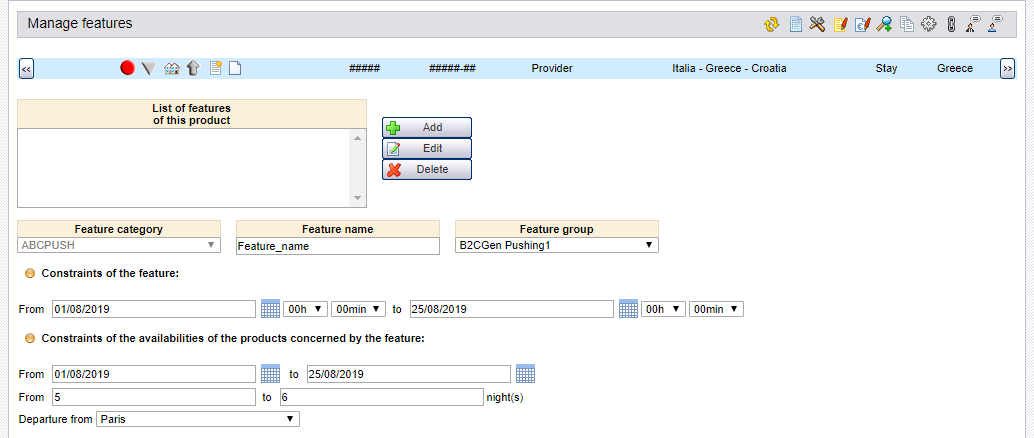
Departure and date constraints on features

When creating a product feature, it will be possible from the Orchestra administration tool to specify a starting town, and/or a range of stay dates, in order to constrain its displayed discount price. If no product availability meets these new constraints, the feature will no longer be effective.

Configuration of a product feature in the admisnistration tool

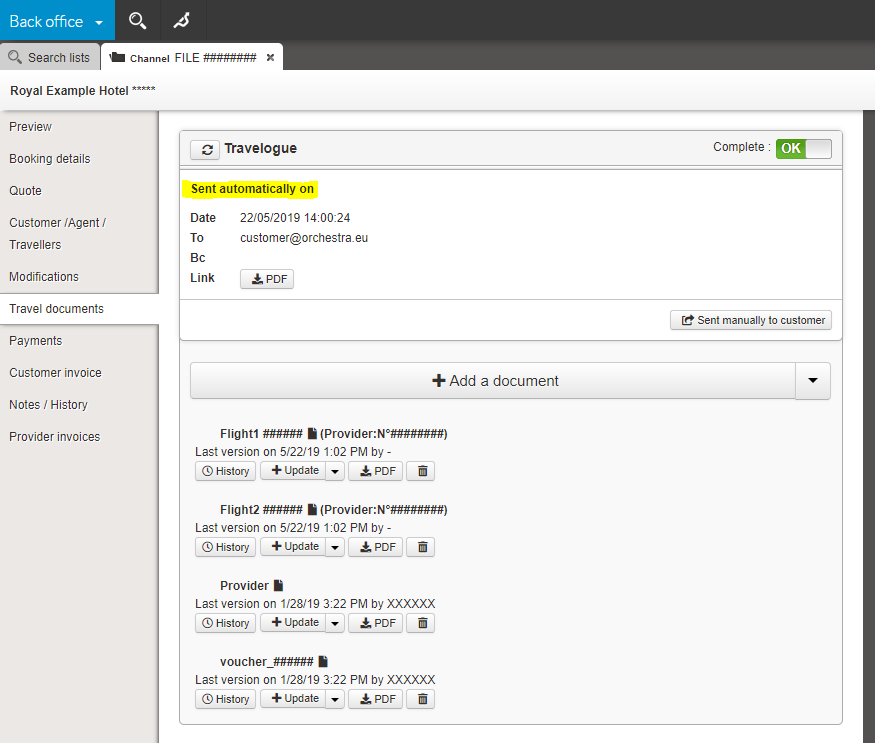
Automatic sending of travel documents

You now have the option of activating a function to automatically send all travel documents to your customer once a travel document exists for each Pre-Package source. At that point, the file can be automatically marked as “Complete”, and no longer requires manual confirmation.